Tips for Lowering Your Blood Sugar, Losing Weight, and Staying Consistent With Diabetes
Over the years I've learned that managing diabetes doesn't require a perfect plan. It requires the right habits, applied consistently. In this post, I'm sharing a collection of practical tips across five areas of your life: nutrition, movement, monitoring, stress and sleep, and daily habits. Find the ones that fit your life and start building momentum today.

When I was first diagnosed, I did not know where to start.
Nobody handed me a clear plan. I had a prescription, a follow-up appointment, and a lot of questions I did not even know how to ask yet.
Over the years, I figured it out one habit at a time. And the tips I am sharing here are the ones that actually moved the needle for me and for people just like you.
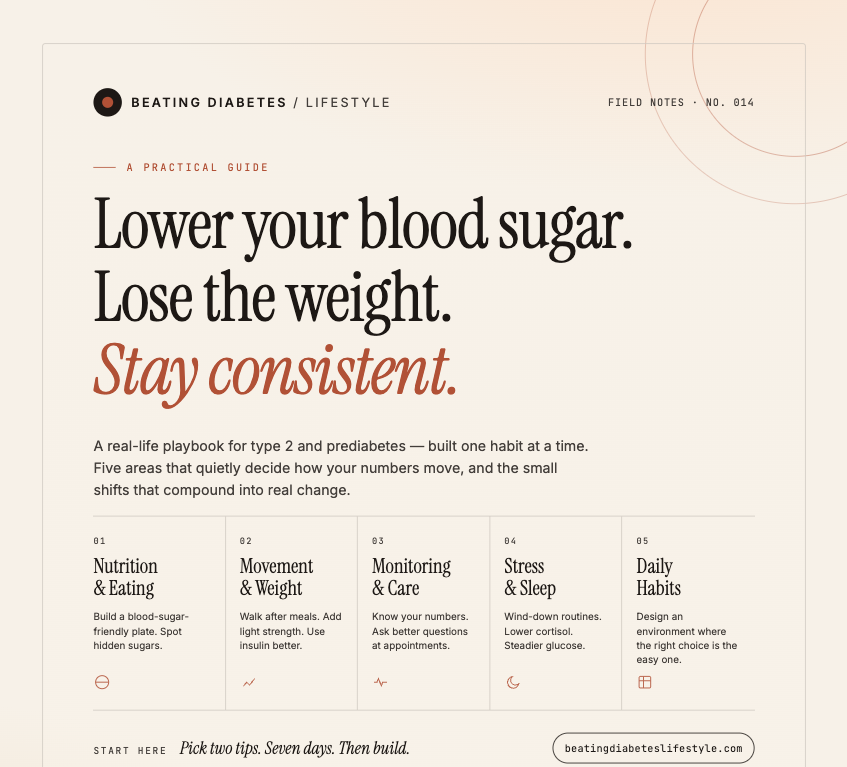
Nutrition and Eating Habits
Most people with diabetes are not struggling because they lack willpower. They are struggling because nobody taught them what a practical, blood-sugar-friendly meal actually looks like in real life.
Not in a diet book. Not on a perfectly lit Instagram plate. In real life, when you are tired, busy, and just trying to get through the week.
The nutrition tips in this episode are built around that reality. How to build a simple plate that keeps your glucose stable. How to spot the hidden sugar sources that most people overlook. How to eat in a way that keeps you full and satisfied without turning every meal into a math problem.
Small shifts in what you eat and when you eat it can produce noticeable changes in your blood sugar readings faster than most people expect.
Movement and Weight
A lot of people hear "exercise" and immediately picture a gym they do not want to go to, a routine they cannot maintain, and a body that does not cooperate the way it used to.
That is a real barrier, and it keeps a lot of people from moving at all.
The movement tips here are not about training for a race or hitting a number on a scale. They are about understanding why your muscles matter so much for blood sugar control, and how even modest, consistent movement can improve the way your body uses insulin.
Walking after meals. Breaking up long stretches of sitting. Adding a couple of days of simple strength work each week. These are the kinds of changes that compound over time and produce results that go far beyond what the scale shows.

Monitoring and Your Medical Team
One of the most common things I hear from people managing diabetes is that they leave their doctor's appointments feeling like nothing really changed.
They went in. They got their numbers. They left with the same prescription and a vague sense that they should probably do better.
That cycle does not have to continue.
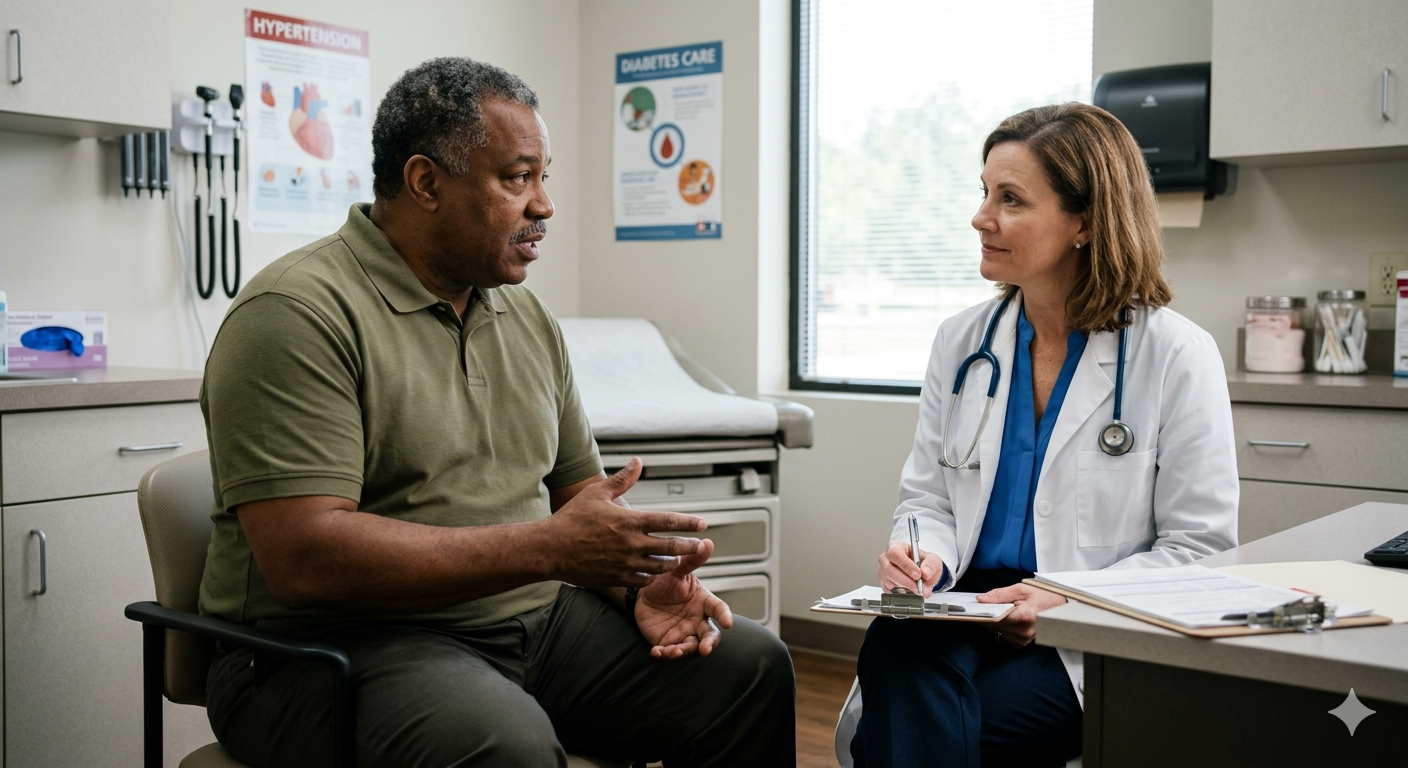
Knowing what your numbers mean, keeping a simple log, and learning how to ask better questions at your appointments can completely change the quality of care you receive. Your medical team is a resource, but you have to know how to use them. These tips help you show up to your appointments prepared and leave with real direction.
Stress, Sleep, and Mindset
Most people managing diabetes focus almost entirely on food and exercise. And then they wonder why their numbers are still difficult to control even when their diet is pretty clean.
Stress and sleep are two of the most underestimated factors in blood sugar management.
When you are not sleeping enough, your hunger hormones go out of balance and your body becomes more resistant to insulin. When chronic stress is running in the background of your life, it raises cortisol levels that push your blood sugar higher regardless of what you ate that day.
These tips address the side of diabetes management that most plans ignore. Building a wind-down routine, finding a daily stress outlet, and shifting from an all-or-nothing mindset to a progress mindset are not soft suggestions. They are practical tools that directly affect your metabolic health.

Daily Habits and Environment
Here is something most people do not realize. The hardest part of managing diabetes is not knowing what to do. It is building an environment that makes doing the right thing easier than doing the wrong thing.
When tempting foods are easy to reach, you will reach for them. When you have nothing prepared, you will make an impulsive decision. When your habits are not anchored to something you already do, they disappear under pressure.
These tips are about building the systems and the environment around you that make consistency less dependent on motivation. Because motivation runs out. Good systems do not.
What to Do Next
Pick two or three tips from any category that feel immediately doable in your current life
Commit to those specific habits for the next seven days before adding anything new
Listen to the full episode at beatingdiabeteslifestyle.com for the complete breakdown
Join our Facebook Community Group called The Beating Diabetes Lifestyle Community. I would like you to connect with others in this growing community of folks, like you, who want to live healthy. Click here to learn more.
©2026 Oscar Camejo - The Beating Diabetes Lifestyle
The Simplest Way to Lower Your Blood Sugar Without Living in the Gym
You cleaned up your eating, but your blood sugar numbers are still not moving. The missing piece might be how much you are sitting. In this episode, Oscar breaks down what a sedentary lifestyle really means, why it keeps your blood sugar stuck, and the simplest way to start changing it without living in the gym.
You cleaned up your eating. You cut back on the sweets. You stopped the late-night snacks.
But you look at your A1C or your fasting blood sugar numbers and you are still thinking, "What else am I missing?"
Here is something most people do not hear enough: the problem might not be your food at all. It might be how much you are sitting.
What "Sedentary" Actually Means
Being sedentary is not just "not working out."
It means you are spending long stretches of your waking day sitting or lying down with very little movement in between.
And here is the part that surprises most people: you can exercise and still live a sedentary lifestyle.
You can do a 30-minute workout and then sit for the next 10 hours. That still counts as a sedentary day.
The question is not just "Do you work out?" The bigger question is how much of your day is spent not moving at all.
Why It Keeps Your Blood Sugar Stuck
Let me explain insulin resistance in a way that actually makes sense.
Picture your muscle cells like a house. Your bloodstream is the street outside. Glucose is the delivery truck bringing energy to your door.
Insulin is supposed to be the key that opens the door and lets that energy inside.
But when you are insulin resistant, the door is stuck. The key keeps showing up, but the lock is jammed.
So glucose backs up in your bloodstream. Your body keeps sending more insulin. And still, that door is not opening the way it should.
Here is why movement matters so much: even light movement acts like oil on that rusty lock.
It tells your muscles to open up and use the fuel that is already there. Instead of glucose circling in your bloodstream, it finally has somewhere to go.
That is why sitting all day is not just rest. For a lot of people, it is like leaving the door locked and then wondering why the numbers are not coming down.
This Is What a Sedentary Day Looks Like

You might not even realize you are living this pattern.
Wake up and sit at breakfast
Sit in traffic or at a desk
Sit through meetings
Sit through lunch
Come home tired and sit on the couch
And when your body is still for that long, your brain starts looking for comfort. That is where cravings come from. That is how late-night snacking sneaks back in.
Stillness leads to comfort seeking. Comfort seeking leads to cravings. Cravings lead to eating at night.
It is all connected.
What to Do Next: Your Simple Battle Plan
You do not need to overhaul your whole routine. You just need to start moving in a way that fits real life.
Here is the blueprint: Sit less. Move more. Build muscle.
Step 1: Break Up Your Sitting
Every 30 to 60 minutes, stand up and move for a couple of minutes. Not a workout. Just movement.
Stand and stretch
March in place
Walk to the kitchen and back
Take the stairs once
Walk during phone calls
This alone starts to interrupt the pattern.
Step 2: Walk After One Meal Each Day
If you want one habit that gives a big return, this is it.
Take a 10 to 15 minute walk after one meal, especially after dinner. You do not have to walk fast. You just have to do it consistently.
That one habit can help your muscles pull glucose out of your bloodstream right when it is highest.
Step 3: Start Building Muscle (Even a Little)
Strength training helps your body manage glucose better long-term. You do not have to lift heavy. You just have to be consistent.
Even two short sessions per week, 10 to 15 minutes each, is a solid starting point.
Your 7-Day Starter Plan
Keep it simple this week:
Daily: 10-minute walk after one meal
Daily: Two movement breaks, one in the morning and one in the afternoon
This week: Two short strength sessions, 10 to 15 minutes each
And if that still feels like too much, start smaller. One movement break per day is enough to begin.
Consistency beats intensity every time.
Ready for the Full Episode?
Watch or listen to the full episode below.
And if you want a free resource to help you plan your meals and track your progress, grab the free Weight Loss Planner here: beatingdiabeteslifestyle.com/weight-loss-planner
Join our Facebook Community Group called The Beating Diabetes Lifestyle Community. I would like you to connect with others in this growing community of folks, like you, who want to live healthy. Click here to learn more.
©2026 Oscar Camejo - The Beating Diabetes Lifestyle

Foods That Make Reversing Diabetes Difficult: The Truth About Ultra-Processed Food
Ultra-processed food is not just "bad food." It is food that has been manufactured with industrial ingredients you would never find in your own kitchen.
It is built to taste amazing, last forever on a shelf, and make it very easy to overeat. We are talking about chips, pastries, cookies, sugary cereals, fast food, frozen microwave meals, candy, and a lot of the snack foods that get marketed as healthy.
Yes, even some of those protein bars.
I am not saying you can never eat something that comes in a package. That is not realistic. But there is a clear difference between regular processed food and ultra-processed food, and that difference is what keeps a lot of people stuck.
You grab something quick because you're tired, busy, or stressed out. An hour later, you're hungry again. Then you feel guilty and think you just need more willpower.
But here's what I need you to understand: the problem is not you. A lot of the food we call normal today was designed to keep you coming back for more. And if you are living with prediabetes, type 2 diabetes, high blood pressure, or high cholesterol, this is one of the most important things you need to know.
What Ultra-Processed Food Actually Is
Ultra-processed food is not just "bad food."
It is food that has been manufactured with industrial ingredients you would never find in your own kitchen.
It is built to taste amazing, last forever on a shelf, and make it very easy to overeat. We are talking about chips, pastries, cookies, sugary cereals, fast food, frozen microwave meals, candy, and a lot of the snack foods that get marketed as healthy.
Yes, even some of those protein bars.
I am not saying you can never eat something that comes in a package. That is not realistic.
But there is a clear difference between regular processed food and ultra-processed food, and that difference is what keeps a lot of people stuck.
Why It Keeps Your Blood Sugar Struggling
Here is what ultra-processed food does to your body, and why it makes reversing diabetes feel so hard. Most of this food is low in fiber.
Fiber is what helps slow down your blood sugar from spiking after you eat. Without it, you eat, your blood sugar shoots up, then it drops, and then the cravings start all over again.
It also tends to be loaded with sugar and sodium.
Your body experiences that spike and drop cycle and your hunger signal never really gets the message that you are full.
So you eat more.
You snack more.
And the whole time you think you just lack discipline.
You do not lack discipline.
You are trying to use willpower against food that was literally engineered to override your "I'm full" signal.
That is not a fair fight.
This Used to Be Me

Before I lost over 80 pounds, I was working late nights, sometimes until 2 in the morning.
And while I worked, I grazed. Not big meals, just constant grazing.
Peanut butter and jelly sandwiches, chips, cookies, pop tarts, soda, fruit juice. Whatever was in the cupboard, I ate it.
I would be hungry again in 20 minutes and repeat the whole cycle. No wonder I gained weight.
I was not thinking about what I was eating. I was not thinking about the time.
I was being productive at work and neglecting the most important project I had, which was my health.
When I finally got serious, I started researching foods that could actually satisfy me.
I kept it simple. And everything changed.
How Ultra-Processed Food Shows Up in Everyday Life
You do not have to be eating fast food every day for this to apply to you.
Some people tell me they do not even eat sweets like that. But they drink sweet juice every day.
They drink sports drinks. They grab flavored coffee beverages. They snack on packaged food all afternoon.
You may not be eating dessert, but you could still be drinking a lot of sugar.
There is also the desk drawer trap.
A little bag of chips here. Some candy there.
It feels small, but it adds up.
And by the time you get home, you are tired and starving and you are way more likely to overeat at night.
Convenience becomes a lifestyle.
And eventually your body is the one paying the bill.
What to Do Next: Your Simple Battle Plan
You don’t need to overhaul everything by Monday. If you try to change everything at once, by Thursday you will be burned out and back to square one. Here is what actually works.
Step 1: The One Swap Rule
Pick one ultra-processed food you eat regularly and swap it out this week. Just one.
Chips? Try a handful of mixed nuts, fruit, or cheese.
Sugary cereal in the morning? Try eggs or Greek yogurt.
Fast food at lunch? Try baked chicken or a simple chicken salad.
Soda or sweet juice? Try water, unsweetened tea, or sparkling water.
One swap. That is it for this week.
Step 2: Build Simple Meals at Home
You do not need to be a chef. You need simple meals you can repeat.
Think lean protein, non-starchy vegetables, whole grains if you need them, and a healthy fat to keep you satisfied.
Some examples:
Rotisserie chicken, green beans, and a small serving of brown rice
Ground turkey with mixed vegetables and avocado on the side
Salmon and salad with quinoa
Eggs and sauteed spinach with a slice of whole grain toast
Keep your drinks non-sugary. Water, unsweetened tea, sparkling water. Nothing high in sugar.
Step 3: Check the Label
You do not need to become a food scientist. But here is a quick test: if the ingredient list looks like a science project, do not make it your everyday food.
If sugar is listed as one of the first ingredients, that means it is the main ingredient. That is a clue. I am not saying never eat it. I am saying do not make it a daily habit.
Step 4: Create a Default Grocery List
Decision fatigue is real. When you are tired and standing in the grocery store, you will grab whatever is familiar.
Build a list you can use on autopilot. A simple framework: 5 proteins, 5 fruits and vegetables, 3 quick carbs, and 2 healthy fats. No guesswork. You are building a system.
You can even use ChatGPT to generate simple meal ideas that fit your lifestyle. Ask it: "Give me 10 simple breakfast, lunch, and dinner ideas using non-starchy vegetables, lean protein, whole grains, and healthy fats." It will give you a starting point and you can take it from there.
Step 5: Redefine What Success Looks Like
Success is not perfection. Success is consistency.
The goal is simple: eat less ultra-processed food more often than not. That is it. One better choice at a time.
Ready for the Full Episode?
Watch or listen to the full episode below.
And if you want a free resource to help you plan your meals and track your progress, grab the free Weight Loss Planner here: beatingdiabeteslifestyle.com/weight-loss-planner
Join our Facebook Community Group called The Beating Diabetes Lifestyle Community. I would like you to connect with others in this growing community of folks, like you, who want to live healthy. Click here to learn more.
©2026 Oscar Camejo - The Beating Diabetes Lifestyle

The Real Reason You Keep Snacking at Night
When it comes to reaching our goals, few things are as frustrating as feeling like we’re running in circles. You start strong, set your intentions, but then something gets in the way, and you’re back to square one. Sound familiar? It does to me, too. I know the struggle of taking steps forward only to be pulled back by unproductive habits. Today, I want to share a system I’ve developed to help you break this cycle and start making real progress.
Late-night eating is one of those habits that feels normal until you realize it’s quietly working against you.
If you’re dealing with prediabetes, type 2 diabetes, insulin resistance, or stubborn weight, this is one routine that can make your progress feel harder than it needs to be.
The pattern most people don’t notice
Here’s how it usually goes.
You finish the day, you finally sit down, and food becomes part of “relaxing.”
It starts small.
Then it turns into “one more bite” until you realize you’ve eaten more after dinner than you ate all day.
Common late-night eating scenarios:
Snacking while watching TV or scrolling your phone
Grabbing something “quick” because you stayed up too late
Eating because you’re stressed, not hungry
Grazing in the kitchen with no real stop point
Snacking after dinner even though dinner was recent

My game-changer “life hack” was cutting TV at night
Years ago, I made a conscious decision to reduce my TV watching during the week. I realized I was constantly eating while watching the latest episodes of my favorite shows back then.
It wasn’t hunger.
It was mindless eating.
So I stopped watching TV at night during the week, and it was a game changer for me.
I replaced TV time with habits that left me feeling healthier and more productive: working out, reading, and podcasting.
It also helped me get to bed earlier, no later than 10pm.
And when you go to bed earlier, you naturally stop eating so late at night.
Takeaway: If the routine is the trigger, changing the routine is the breakthrough.
Habits That Keep Us Stuck

Late-night eating isn’t always hunger, it’s often habit
A lot of people say, “I’m hungry at night.”
Sometimes you truly are hungry, but often it’s a habit loop.
Ask yourself this simple question:
Is this hunger… or is this my routine asking for a reward?
Hunger vs. Habit (quick clues)
It’s more likely hunger if:
Your stomach is actually growling
You didn’t eat enough protein earlier
Dinner was small or very early
You feel physically low-energy, not just mentally tired
It’s more likely habit if:
You only crave snack foods, not real food
You’re eating because you’re bored, stressed, or overstimulated
You eat automatically when the TV turns on
You’re not satisfied, but you keep snacking anyway
Why late-night eating can keep you stuck
Your body is designed to wind down at night.
When you eat late, your body is still working when it should be recovering.
This can impact:
Sleep quality (even if you fall asleep)
Morning cravings (tired body wants quick fuel)
Energy the next day
Consistency with weight loss and blood sugar goals
And if your late-night snacks are ultra-processed foods, that’s a double problem. Those foods are designed to keep you eating even when you’re not truly hungry.
The Late-Night Eating Battle Plan (simple and realistic)
This is not about perfection.
This is about building a repeatable plan you can stick with.
1) Set a “Kitchen Closed” time
Pick a realistic cutoff time like 8:30pm or 9:00pm.
You’re not trying to be extreme, you’re trying to be consistent.
2) Eat a dinner that actually satisfies you
If dinner doesn’t satisfy you, the night will.
Build your plate around:
Lean protein
Non-starchy vegetables
Healthy fats
Optional whole-food carbs depending on your plan
3) Replace the routine
If your routine is couch + TV + snacks, then that routine is the trigger.
Try replacing it with:
A 10–20 minute walk after dinner
Hot tea
Stretching or mobility
Reading
Prepping tomorrow’s breakfast
A simple “wind-down” routine that gets you to bed earlier
4) Create a smart “emergency option”
If you’re truly hungry, don’t suffer.
Plan one simple, protein-forward option so you don’t end up in pantry chaos.
5) Fix the root issue: staying up too late
If you’re up late enough, you’ll eventually want to eat.
Move bedtime earlier by 15 minutes at a time and cut screens down before bed if you can.
Quick self-check (this is where the real change starts)
Use these five questions tonight.
Answer them honestly.
Am I eating because I’m hungry or because I’m tired?
Did I eat enough protein today?
What time did I eat dinner?
What time do I usually start snacking?
What emotion shows up at night?
Awareness is progress.
Once you see the pattern, you can change the pattern.
If you want to hear the full breakdown and walk through this with me, watch the episode on video here:
Watch the full episode on video, also available in audio format only.
Join our Facebook Community Group called The Beating Diabetes Lifestyle Community. I would like you to connect with others in this growing community of folks, like you, who want to live healthy. Click here to learn more.
©2026 Oscar Camejo - The Beating Diabetes Lifestyle

Changing Unproductive Habits That Keep Holding You Back
When it comes to reaching our goals, few things are as frustrating as feeling like we’re running in circles. You start strong, set your intentions, but then something gets in the way, and you’re back to square one. Sound familiar? It does to me, too. I know the struggle of taking steps forward only to be pulled back by unproductive habits. Today, I want to share a system I’ve developed to help you break this cycle and start making real progress.
When it comes to reaching our goals, few things are as frustrating as feeling like we’re running in circles. You start strong, set your intentions, but then something gets in the way, and you’re back to square one. Sound familiar? It does to me, too. I know the struggle of taking steps forward only to be pulled back by unproductive habits. Today, I want to share a system I’ve developed to help you break this cycle and start making real progress.
My Journey to Breaking Old Habits
Years ago, I found myself in a tough place. I’d been diagnosed with type 2 diabetes and weighed 268 pounds. Coming home from the hospital, I felt overwhelmed. I wanted to turn things around, but I didn’t know where to start. I ordered a diabetic cookbook, bought some new gym clothes, and committed to small steps every day. I started making little changes and, over time, began to see results. But it wasn’t easy. Each day was a battle against old eating habits and negative thoughts.
Let me tell you, it was like climbing a mountain. If you’ve ever walked up a steep incline or climbed endless flights of stairs, you know the feeling. Every step is tough, and there are moments you want to turn back. But halfway up, you’re faced with a choice: quit because it’s hard or look back, celebrate how far you’ve come, and keep moving. That choice to keep going brought me closer to victory each day.
The Productivity Quadrant System
Productivity isn’t about filling every minute with tasks. It’s about making consistent, meaningful progress. Over the years, I developed what I call the Productivity Quadrant System. This simple tool helps me, and now hopefully you, stay focused and take small steps toward lasting change. Here’s how it works.
Imagine a square divided into four parts — four quadrants — each one representing an area of life that impacts productivity. When we address habits in each of these areas, we create a balanced approach that allows us to grow without feeling overwhelmed.
Physical Health – “Working on the Person in the Mirror”
Mental Focus – “Strengthening Your Mental Muscle”
Time Management – “Mastering the Clock, Not the Other Way Around”
Personal Development – “Investing in Your Best Self”
Each quadrant has three habits that commonly hold us back. Start by choosing one habit in each area to work on. The goal isn’t perfection; it’s to make small, steady changes.

Habits That Keep Us Stuck

Let’s take a closer look at the habits in each quadrant:
1. Physical Health
Ignoring sleep
Poor eating habits (skipping meals)
Leading a sedentary lifestyle
2. Mental Focus
Over-checking social media
Not prioritizing tasks
Self-doubt and overthinking
3. Time Management
Procrastination
Overcommitting
Lack of planning
4. Personal Development
Avoiding challenges
Negative self-talk
Neglecting learning opportunities
These habits might feel familiar. I’ve been there, too. But here’s the key: you don’t need to change everything at once. Start with one small adjustment in each area, and build from there.
Climbing Your Own Mountain
Like climbing a mountain, this journey is all about endurance. Each step forward, no matter how small, brings you closer to your goal. There will be times you feel like giving up, but remember to pause, look back, and celebrate how far you’ve come. Every small win is progress.
It’s not always easy. I know that firsthand. But just as I made it through the tough days and fought back against old habits, you can, too. When you stumble, pick yourself up and keep moving forward. Progress isn’t about reaching the peak right away; it’s about making steady, consistent steps toward your goals.
Final Thoughts
You deserve to live a life where you’re making progress every day, no matter how small. Breaking unproductive habits isn’t easy, but with a clear system and a commitment to consistency, you can do it. Start small. Stay focused. And as my dad used to say, “Siempre sigue adelante” — always keep moving forward.
So keep going, my friend. Trust the process, keep making those small changes, and remember: every step you take is one step closer to victory.
Stay focused. Keep moving. Never go back. Bounce back. Trust God. You got this!
Join our Facebook Community Group called The Beating Diabestes Lifestyle Community. I would like you to connect with others in this growing community of folks, like you, who want to live healthy. Click here to learn more.
©2024 Oscar Camejo - The Beating Diabetes Lifestyle

How to Bounce Back Better: Turning your Setbacks into setups
Back in 2018, when I was first diagnosed with prediabetes, my doctor’s office sent me home with a one-page document that had “Mediterranean Diet” written at the top. That sheet included a list of foods to eat and ones to avoid. I was told that I needed to lose weight in order to prevent my condition from getting worse. Apparently, this Mediterranean diet I had just learned about was the key.

WRITTEN BY OSCAR CAMEJO JR.
PHOTOGRAPHY MIKE COLLETTA IMAGES
STYLING BY OSCAR CAMEJO JR. & IVORY FILLMORE
I am writing this article a few days away from my 50th birthday. Wow. Turning 50 is so surreal.
Looking back over my life, I can’t help but to be grateful to God that I made it to the big FIVE-0. They say life is short, so you might as well make the most of it. What a true statement.
Like so many people, I have experienced lots of ups and downs in 50 years. I almost died a few times. Been divorced twice. Phew! Maybe one day I’ll write a memoir about my experiences and how I handled setbacks in detail. We’ll see.
Siempre Sigue Adelante
My dad taught me so many valuable lessons in life. He passed away in 2018, the day after Father’s Day. My dad “Paco” (that was his nickname) was Afro-Cuban. He was one of those old-school Cubans who loved people, music, and got along with everyone. He loved cooking, good Cuban food, and laughter among friends.

He wasn’t the richest dad. I didn’t inherit a ton of cash. However, he left me something more valuable: a legacy of wisdom.
My dad used to always say, “Siempre sigue adelante,” which in Spanish, means “always keep moving.” If you have followed me on social media for any length of time, you’ve probably heard me use the phrase “stay focused, keep moving, never go back” quite a bit. If so, now you know the backstory.
My dad’s “always keep moving” philosophy has helped me during some of the darkest of times. It’s become a mindset that fuels my desire to never allow setbacks to stop me.
Setbacks Are Setups
When we experience unexpected setbacks and disappointments, we have two choices: learn from them and grow, or allow them to hold us back and throw us off course. I often tell folks that “Setbacks are setups for you to experience better!”
There’s something about having forward momentum even in the midst of things not going so well in life. Imagine if you could apply this same mindset to every aspect of your life, regardless of your circumstances.
It may be hard right now. Perhaps you’re in what feels like the fight of your life. Your situation may even feel hopeless. I get it. But like Paco used to say, “siempre sigue adelante”; always keep moving.
Setbacks come in the form of all kinds of experiences. The Merriam-Webster Dictionary defines a setback as “a slowing of progress; a temporary defeat.”
I’m pretty sure you could think of a situation in your life where your progress might have been slowed, or you experienced what felt like defeat. Perhaps it was a divorce, a recent breakup, an unexpected financial obligation, a health diagnosis, a lost job, or maybe a huge business deal that fell through.
Think back to how you handled that experience. What did it feel like? What were your thoughts regarding the outcome?
The Principle of Perception

How we think and the thoughts we stew on can play a major role in how we handle the unexpected.
Have you ever worried so much about a situation and the potential “what if’s,” only for things to eventually work out in the end? Perhaps you got yourself all worked up, stressed out, and anxious for nothing.
Perception is basically how we see things. If we perceive that a situation is way too overwhelming for us to overcome, then it’s likely we won’t overcome it. If we adopt a defeatist mentality, then we’ve already lost.
The 19th Century poet Walter D. Wintle wrote the following poem titled “Thinking”:
If you think you are beaten, you are;
If you think you dare not, you don't.
If you'd like to win, but you think you can't,
It is almost a cinch you won't.
If you think you'll lose, you've lost;
For out in this world we find
Success begins with a fellow's will
It's all in the state of mind.
If you think you're outclassed, you are;
You've got to think high to rise.
You've got to be sure of yourself before
You can ever win the prize.
Life's battles don't always go
To the stronger or faster man;
But soon or late the man who wins
Is the one who thinks he can!
So, I would say that it behooves us to transform our way of thinking to begin the process of transforming our lives. Remember, the goal is to bounce back from your situation better than ever before. But it starts on the battlefield of your mind.
How to Bounce Back Better
When I was going through my relationship challenges sometime ago, I was also dealing with health complications. It was like a double whammy. I felt terrible both mentally and physically. I was a mess, but no one really knew what was going on.

For me, bouncing back from that time period became a must. I was tired of not being myself; tired of being overweight, stressed out, worried, unhealthy, and emotionally drained.
I chose to bounce back better than ever.
Looking back, I didn’t have a step-by-step roadmap to bouncing back. But, I did have enough sense to start the process. Here are a few key things I learned along the way.
Accept Self Love
When we go through tough times, it’s often easy to beat ourselves up. We blame ourselves for mistakes or for things not going as planned. That blame turns into self-hatred sometimes, and we fall out of love with the person who is with us 24/7: us.
So learn to love yourself because you’re worth loving. No matter what’s going on, stop beating yourself up. Love the seemingly unlovable. As you do, you’ll slowly start the process of bouncing back. Why? Because you will be in a better place mentally to do whatever it takes to transform your life. You’re worth it!
Prioritize Self Care
Self love has a way of motivating us to begin examining what areas of our lives need an overhaul. You see; sometimes we neglect ourselves when we’re in that place of depression, sadness, worry, confusion, doubt, and anxiety. That is why we need to shift our focus and prioritize self care.
The following key areas of self care are what I recommend you zero in on.
Make Better Nutrition Choices (e.g. consume healthier foods and drinks)
Improve Your Physical Health (e.g. exercise; lose weight; sleep better)
Pursue Personal Development (e.g. read more; learn new skills; complete a professional certification program; finish school; journal your thoughts; create a vision board; dream big)
Build New Relationships and Strengthen the Existing Good Ones (e.g. get involved in rebuilding your personal community)
Seek Professional Help for Mental Health (e.g. therapy; counseling)
Allow Your Spirit and Soul to Heal (e.g. prayer; meditation; attend church; confide in a mentor)
Pursue Transformation
A butterfly is a caterpillar first.
So become a better version of yourself by being willing to change. Make up your mind to go through the process of turning your life around. Like a tenacious pitbull, do whatever it takes to pursue your transformation with everything that’s in you. Pursue success; don’t wait for it!
Be Patient
Anything worth pursuing will demand patience. So don’t expect lasting results overnight. Transformation takes time, requires consistency, and will become a reality with a plan. You can apply this to almost any circumstance. Experience teaches us patience, and patience brings about growth. So use setbacks as opportunities for development.
Pursue Peace

When we think of the word “peace,” we often limit it to having peace of mind. That’s ok, but it’s incomplete. I want you to broaden your understanding of what it means to have peace.
Think of wholeness in every area of life: spirit, soul and body.
Sometimes, when we experience life-changing setbacks of any kind, there’s a kind of brokenness that occurs. You may have heard some people say, “I feel broken” after a divorce, or after receiving a medical diagnosis. That emotional brokenness can be painful.
If that’s your situation, be encouraged. There is healing for that brokenness. If you haven’t figured it out yet, what I’ve shared so far is actually a roadmap to wholeness (peace): self love, self care, pursuing transformation, and developing patience.
Therefore, pursue your wholeness for yourself and not for anyone else. And don’t forget to run your own race. Pace yourself.
Conclusion
You deserve to be refreshed, renewed, and living your best life regardless of what you’re experiencing at the moment.
So stay focused. Keep moving. Never go back. Leap forward. Bounce back better because you can, my friend! And above all else, trust God! You got this. I believe in you.
Join our Facebook Community Group called The Beating Diabestes Lifestyle Community. I would like you to connect with others in this growing community of folks, like you, who want to live healthy. Click here to learn more.
©2023 Oscar Camejo - The Beating Diabetes Lifestyle

The Mediterranean Diet: A Sustainable Lifestyle for Losing Weight and Reversing Type 2 Diabetes
Back in 2018, when I was first diagnosed with prediabetes, my doctor’s office sent me home with a one-page document that had “Mediterranean Diet” written at the top. That sheet included a list of foods to eat and ones to avoid. I was told that I needed to lose weight in order to prevent my condition from getting worse. Apparently, this Mediterranean diet I had just learned about was the key.
Back in 2018, when I was first diagnosed with prediabetes, my doctor’s office sent me home with a one-page document that had “Mediterranean Diet” written at the top. That sheet included a list of foods to eat and ones to avoid. I was told that I needed to lose weight in order to prevent my condition from getting worse. Apparently, this Mediterranean diet I had just learned about was the key.
Around this time, I was roughly 268 pounds, dealing with high blood pressure, and Hyperlipidemia (basically high cholesterol and high triglycerides). I was at risk of a heart attack or stroke.
I didn’t like how I looked in the mirror, and I didn’t like how I was feeling. Something was “off” and I knew it.
Leaving my doctor’s office, I decided that I would give this Mediterranean diet thing a try. I tried some of the food suggestions on the sheet my doctor gave me. I even started exercising; walking and going to the gym occasionally. Sometimes, I even cut back on pasta, bread and rice.
Unfortunately, I wasn’t 100% committed to actually turning my health around. My attitude was, “Well, at least I don’t have full blown Type 2 diabetes. I’ll figure it out somehow.”
Fast-forward to August 2020. I found myself still overweight, and still dealing with high blood pressure and high cholesterol. The only difference, though, is now I had indeed developed Type 2 diabetes, which I learned about while in the hospital.
I was sick and felt like I was dying.
I Should Have Listened Early On
I became obese in a short period of time leading up to 2018. In fact, between 2015 and 2018, my health was quietly declining. Taco Tuesdays and Pizza Thursdays, and eating fast food two to three times a day contributed to my poor health.
Looking back years later, now that I’ve lost over 80 pounds, having reversed Type 2 diabetes, I wish I had followed my doctor’s orders back in 2018. I should have listened.
Knowing what I know now about nutrition and overall health, I am convinced that I could have prevented myself from developing Type 2 diabetes, and prediabetes beforehand for that matter. My lifestyle at the time of regularly eating fried foods, over-processed meats, consuming high sugary drinks and foods, not drinking enough water, and not exercising consistently, caused my health to spiral out of control.
Why Consider a Mediterranean Lifestytle Diet?
Regaining control of our health throught nutrition is critical. But there are lots of diet trends that have surfaced over the years, and leaves many people confused as to where to begin. Die-hard advocates for each diet plan swear up and down that their method is the best solution.
Well, for me, all I can say is that the Mediterranean diet worked for me, and is a sustainable lifestyle for so many. Researchers have conducted numerous studies on this ancient way of eating, and have concluded that it is a viable option. It’s simple to incorporate. I’m all about simple solutions that anyone can follow and achieve results.
So, here are some overall benefits to consider as you contemplate adopting the Mediterranean lifestyle diet.

Promotes heart health
Slows the progression of plaque buildup in your arteries, minimizing your risk for heart disease
Helps to lower blood pressure. High blood pressure can lead to heart attacks and strokes.
Supports healthy blood sugar levels
It helps stabilize blood glucose and protect against Type 2 diabetes
Reduces fasting blood sugar levels, and improves A1C
Shown to decrease insulin resistance, which is a condition that impairs the body's ability to use insulin to regular blood sugar levels
Protects brain function
Helps combat memory fog, memory loss, and cognitive decline
Can lower the risk of dementia and Alzheimer’s disease
How to get started with following the Mediterranean diet and lifestyle
Getting started with any new program, especially a diet, starts with a firm commitment to changing. Without a firm commitment, it is almost certain that you will have a tough time reaching your goals.
Commit to eating healthier.
So for the sake of knowing what to do to kick start incorporating the Mediterranean diet, below are a few very important things to consider.
Focus on protein, fats and carbohydrates.
What to eat:
Eat vegetables, fruits, nuts, seeds, legumes, potatoes, whole grains, herbs, spices, fish, seafood, and extra virgin olive oil.
What to eat in moderation with limits:
Eat poultry, eggs, cheese, and yogurt in moderation.
What to eat rarely:
Reduce or limit the consumption of red meat, sugar-sweetened beverages, added sugars, processed meat, refined grains, refined oils, and other highly processed foods.
Incorporating more fruits and vegetables into your meals and snacks throughout the day is a great way to get started on the Mediterranean diet. Try adding a side salad or steamed veggie dishes to your main meals, and enjoy a fresh piece of fruit for dessert.
Healthy snacks are also recommended. Here are a few examples:
mixed nuts
a piece of whole fruit
baby carrots with hummus
mixed berries
grapes
Greek yogurt
hard-boiled egg
apple slices with almond butter
sliced bell peppers with guacamole
cottage cheese with fresh fruit
chia pudding
Conclusion
There is no one specific Mediterranean diet that fits everyone. However, it is a pattern of eating and living that I’ve implemented and have experienced results.
I didn’t have to stop enjoying eating food. I simply made a firm decision to eat foods that promote good health; and the Mediterranean style of eating made a difference in my life.
Join our Facebook Community Group called The Beating Diabestes Lifestyle Community. I would like you to connect with others in this growing community of folks, like you, who want to live healthy. Click here to learn more.
©2022 Oscar Camejo - The Beating Diabetes Lifestyle

A Healthy Guide to Good Nutrition
Being “healthy” is more than just exercising regularly and eating healthy foods on occasion. There’s a lifestyle component. You see, when you make up your mind to achieve better health, the focus should be on making it a way of life. Short-term weight loss goals are ok. However, we’re after longevity.
We’re all concerned about our health; at least we should be.
I have come to learn that “being healthy” is more than just exercising regularly and eating healthy foods on occasion. There’s a lifestyle component. You see, when you make up your mind to achieve better health, the focus should be on making it a way of life. Short-term weight loss goals are ok. However, we’re after longevity.
This became very clear after I set off on my health journey to lose weight and reverse type 2 diabetes. At first, losing weight was an obession. I was tired of being overweight and stressed out because of diabetes. Having to take medication and watch what I eat became so frustrating. I didn’t have a clue what I was doing at first. But that changed over time.
I started to focus less on dropping pounds, and more on being healthy. After awhile, losing weight became a natural byproduct of that decision to develop a healthy lifestyle.
As of today, I’ve lost over 80 pounds, and I’m no longer on medication. I exercise daily, and I regularly eat balanced, nutrient-dense meals. I regained my focus. I’m physically fit, and I feel alive. You can too!
Proper Nutrition Is the Key
Whether you’re at your ideal weight or striving to reach your weight goal, is it simply a matter of burning more calories than you take in? The answer is no!
Overall body health improvement, as well as weight gain or loss, must be factored into the equation or you could be heading for problems. Correct nutrition can help to reduce the risk of health-related problems, such as heart disease, obesity, high cholesterol, type 2 diabetes, inflamation, cancer, and other issues.
Proper nutrition, however, involves eating many different foods, monitoring your consumption of some food and beverages, and paying attention to your calorie intake. Good diets offer balanced nutrition that reduces cholesterol, blood pressure, and helps with weight control.
I have come to learn that to function properly, your body must have the correct combination of nutrients:
Carbohydrates (carbs). They are the primary source of ammunition in your diet. The body uses carbohydrates to build glucose which can be used immediately or stored in your body for later. Too much glucose, however, is stored as fat. There are two types of carbohydrates: simple and complex. Sugars are simple carbohydrates. Starches and fibers are complex carbohydrates.
Proteins. Proteins help your body build and maintain muscles and other tissues. They also function in the creation of hormones. Like carbohydrates, excess protein is stored as fat. Animal and vegetable proteins are the two major types of proteins. Too much animal protein can cause high cholesterol, as it is high in saturated fat.
Fat. It may seem strange, but fat is another nutrient your body requires. It comes in both saturated and unsaturated forms. Saturated fat puts you at risk of health problems. Unsaturated fat is healthy, but if it goes through any type of refinement process, it can become saturated fat.
Vitamins. These are also required nutrients. Different vitamins perform different tasks within the body. They can work with your metabolism to help with energy levels for tasks your body needs to perform. It has also been said that certain vitamins can prevent disease.
For example, vitamins A, C, and E, also called antioxidants, can assist with the prevention of coronary artery disease by keeping build up from occurring on artery walls. Vitamin B-1 is needed for digestion and proper nervous system function. Vitamin B-2 is needed for normal cell growth. Vitamin B-3 helps to detoxify your body. Folic acid assists with production of red blood cells. Vitamin D assists with the absorption of calcium. Vitamin K helps your blood clot.
Minerals and trace elements. These are another nutrient your body requires. Both are used in many different body processes. Minerals like chlorine help make your digestive juices. Phosphorus helps build strong bones. Both can be found in the foods we consume, but with a trace element, your body just needs a tiny amount. Salt is one final nutrient your body requires. You should not consume more than 2400 milligrams per day, though, as it might raise your blood pressure. I personally stopped adding salt to my meals. Instead, I added garlic while cooking dinners, for example, to help give my food flavor.
Finding Your Balance and Doing it Well
You should follow several guidelines to create a well balanced, nutritional diet. First, try to consume two and one half cups of vegetables and two cups of fruit each day. When making your selections for each day, be sure to choose a good variety. A good rough guide is to eat as many different colors as possible, this will help you to select from all five vegetable subgroups at least four times per week. Download the “Healthy Grocery Shopping Guide: Fruits & Veggies Edition” I created that goes more in depth.
You should eat at least three ounces of whole grain products each day. At least half of your grain intake should be whole grain based.
I’m not a cow’s milk or goat’s milk drinker. But some believe milk should also be part of a healthy diet. If you decide to incorporate milk, consume at least forty-eight ounces of low fat milk or milk products on a daily basis. Your total fat intake should only be between ten and thirty percent of your calories.
Most of the fats you consume should be in the form of unsaturated fats, as saturated fats can do much to damage your health. Meat, poultry, dry beans, and milk or milk products should all be lean, low-fat, or fat-free. Less than ten percent of your calories should come from saturated fats, and you should always try to avoid trans-fatty acid.
Fiber-rich fruits, vegetables and whole grains should be a regular part of your diet as should potassium rich foods. I don’t recommend consuming alcoholic beverages.
Bottomline, excellent nutrition is the basis of a healthy diet.
Hopefully you found this information to be helpful!
As always, stay focused, keep moving, never go back, Trust God!
Join our Facebook Community Group called The Beating Diabestes Lifestyle Community. I would like you to connect with others in this growing community of folks, like you, who want to live healthy. Click here to learn more.
©2022 Oscar Camejo - The Beating Diabetes Lifestyle