The Simplest Way to Lower Your Blood Sugar Without Living in the Gym

You cleaned up your eating. You cut back on the sweets. You stopped the late-night snacks.
But you look at your A1C or your fasting blood sugar numbers and you are still thinking, "What else am I missing?"
Here is something most people do not hear enough: the problem might not be your food at all. It might be how much you are sitting.
What "Sedentary" Actually Means
Being sedentary is not just "not working out."
It means you are spending long stretches of your waking day sitting or lying down with very little movement in between.
And here is the part that surprises most people: you can exercise and still live a sedentary lifestyle.
You can do a 30-minute workout and then sit for the next 10 hours. That still counts as a sedentary day.
The question is not just "Do you work out?" The bigger question is how much of your day is spent not moving at all.
Why It Keeps Your Blood Sugar Stuck
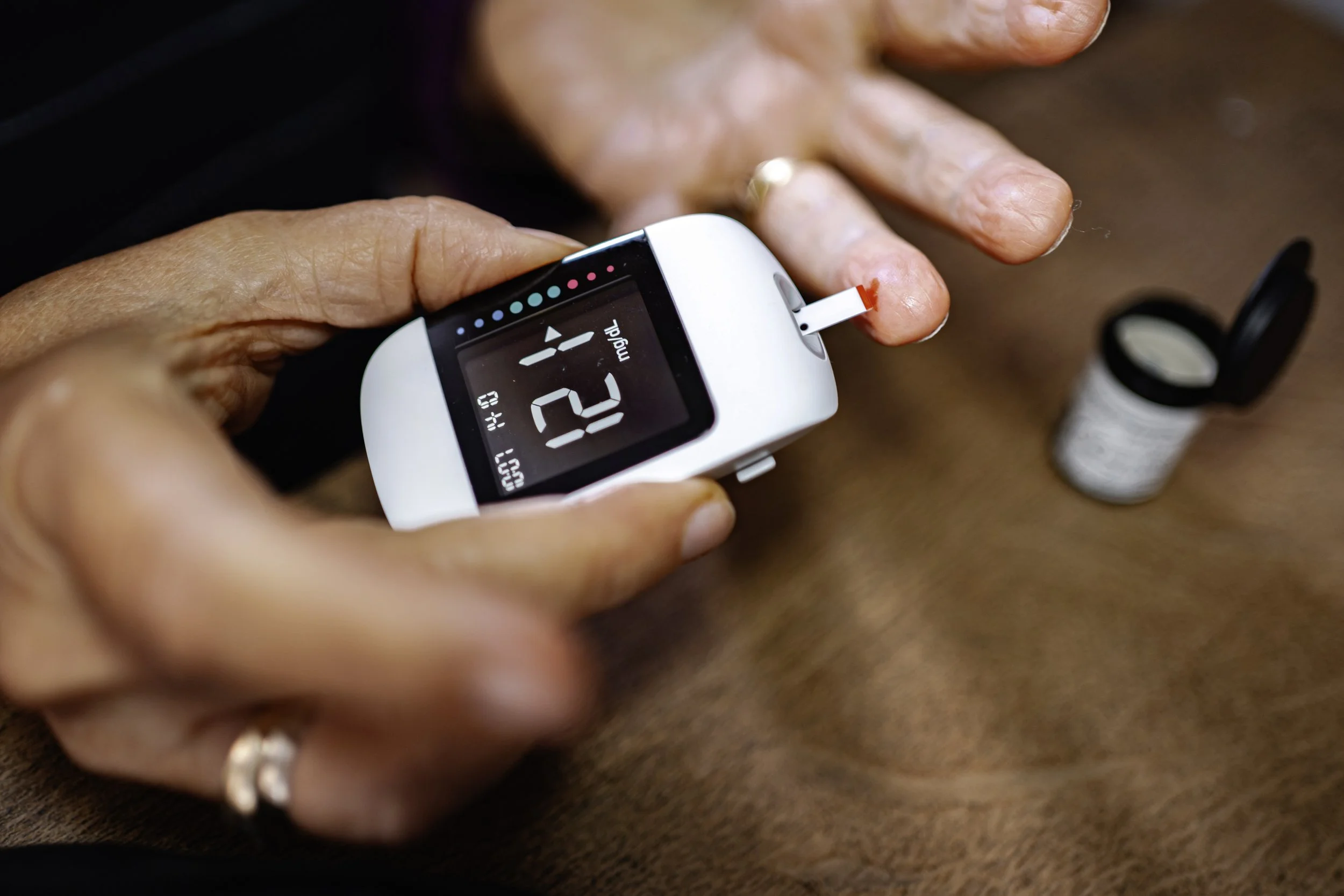
Let me explain insulin resistance in a way that actually makes sense.
Picture your muscle cells like a house. Your bloodstream is the street outside. Glucose is the delivery truck bringing energy to your door.
Insulin is supposed to be the key that opens the door and lets that energy inside.
But when you are insulin resistant, the door is stuck. The key keeps showing up, but the lock is jammed.
So glucose backs up in your bloodstream. Your body keeps sending more insulin. And still, that door is not opening the way it should.
Here is why movement matters so much: even light movement acts like oil on that rusty lock.
It tells your muscles to open up and use the fuel that is already there. Instead of glucose circling in your bloodstream, it finally has somewhere to go.
That is why sitting all day is not just rest. For a lot of people, it is like leaving the door locked and then wondering why the numbers are not coming down.

This Is What a Sedentary Day Looks Like

You might not even realize you are living this pattern.
Wake up and sit at breakfast
Sit in traffic or at a desk
Sit through meetings
Sit through lunch
Come home tired and sit on the couch
And when your body is still for that long, your brain starts looking for comfort. That is where cravings come from. That is how late-night snacking sneaks back in.
Stillness leads to comfort seeking. Comfort seeking leads to cravings. Cravings lead to eating at night.
It is all connected.
What to Do Next: Your Simple Battle Plan
You do not need to overhaul your whole routine. You just need to start moving in a way that fits real life.
Here is the blueprint: Sit less. Move more. Build muscle.
Step 1: Break Up Your Sitting
Every 30 to 60 minutes, stand up and move for a couple of minutes. Not a workout. Just movement.
Stand and stretch
March in place
Walk to the kitchen and back
Take the stairs once
Walk during phone calls
This alone starts to interrupt the pattern.
Step 2: Walk After One Meal Each Day
If you want one habit that gives a big return, this is it.
Take a 10 to 15 minute walk after one meal, especially after dinner. You do not have to walk fast. You just have to do it consistently.
That one habit can help your muscles pull glucose out of your bloodstream right when it is highest.
Step 3: Start Building Muscle (Even a Little)
Strength training helps your body manage glucose better long-term. You do not have to lift heavy. You just have to be consistent.
Even two short sessions per week, 10 to 15 minutes each, is a solid starting point.
Your 7-Day Starter Plan
Keep it simple this week:
Daily: 10-minute walk after one meal
Daily: Two movement breaks, one in the morning and one in the afternoon
This week: Two short strength sessions, 10 to 15 minutes each
And if that still feels like too much, start smaller. One movement break per day is enough to begin.
Consistency beats intensity every time.
Ready for the Full Episode?
Watch or listen to the full episode below.
And if you want a free resource to help you plan your meals and track your progress, grab the free Weight Loss Planner here: beatingdiabeteslifestyle.com/weight-loss-planner
Join our Facebook Community Group called The Beating Diabetes Lifestyle Community. I would like you to connect with others in this growing community of folks, like you, who want to live healthy. Click here to learn more.
©2026 Oscar Camejo - The Beating Diabetes Lifestyle